
The New Best Seller
Romance, Fantasy-Romance, Romantasy, Psychological Suspense, and Thrills. What do readers want?
For much of the publishing industry, the most interesting question of the past five years has not been what the literary establishment thinks readers should read. It has been what readers can make impossible to ignore.
The period from 2021 through 2025 produced an unusually revealing collection of bestselling novelists: Colleen Hoover, Taylor Jenkins Reid, Sarah J. Maas, Rebecca Yarros, Freida McFadden, Emily Henry, and, in a somewhat different category, the enduring commercial machines of James Patterson and Danielle Steel. Their books are different enough to make a literary taxonomy seem almost useless. Yet taken together, they reveal something important about the contemporary publishing business.
The bestseller increasingly begins somewhere other than the publisher’s marketing department.
Colleen Hoover may be the emblematic figure. Her mixture of romance, psychological suspense, and emotionally intense relationships became a publishing phenomenon after readers on TikTok and other social platforms revived books that had already been published. By 2024, Forbes reported that Hoover had sold roughly 1.8 million print copies in the first half of that year alone, despite having no new release.
That is a remarkable publishing fact. A novelist no longer necessarily needs a new book to have a new commercial life.
The same phenomenon became even more pronounced with Sarah J. Maas, whose fantasy-romance novels developed an enormous reader community online. In 2024, Maas was selling substantially more print books than most newly published authors, again demonstrating that social-media enthusiasm can revive an author’s entire backlist rather than merely promote the latest title.
Then came Rebecca Yarros.
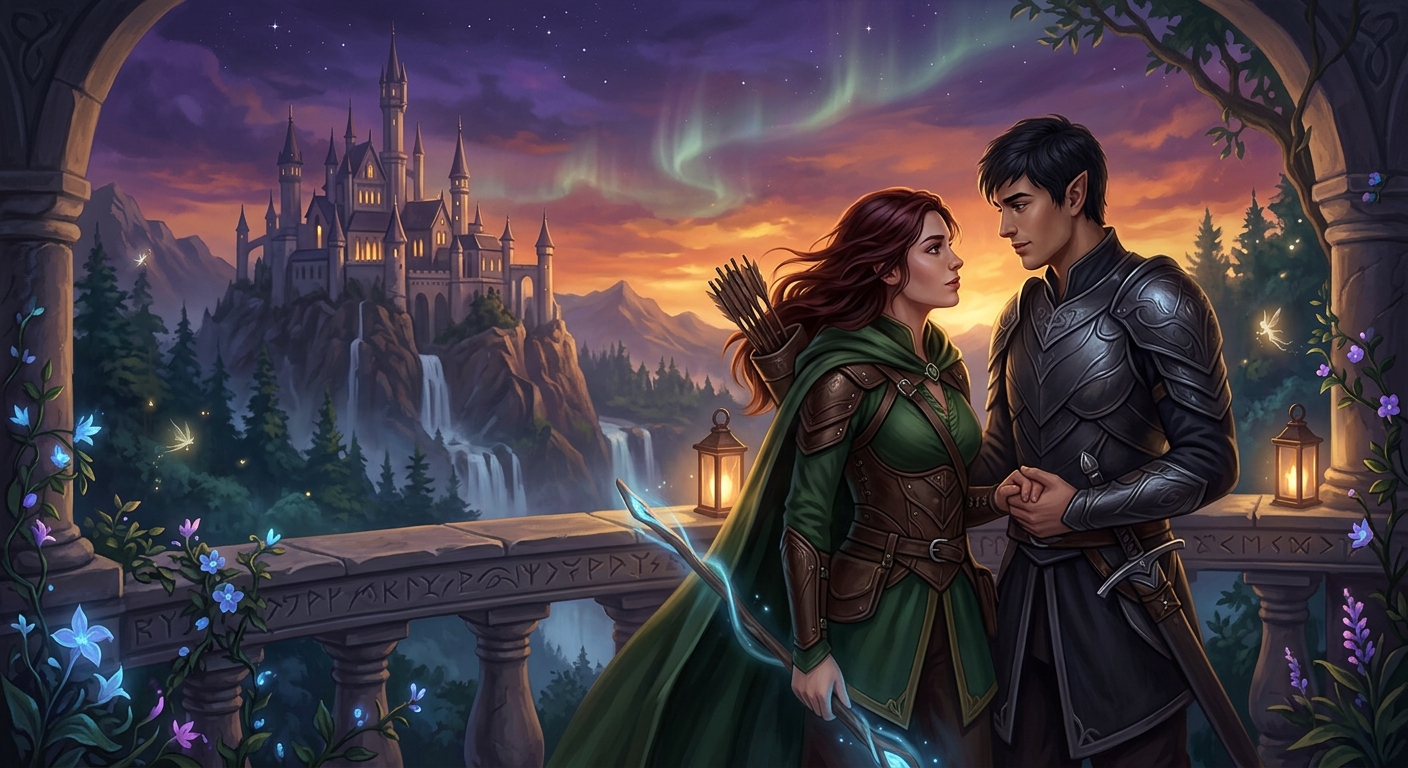
If Hoover represents the power of reader-driven discovery, Yarros represents the fusion of that phenomenon with the modern blockbuster. Fourth Wing and its sequels helped establish “romantasy”—romance intertwined with fantasy—as one of the defining commercial categories of the period. When Onyx Storm arrived in 2025, its deluxe and standard editions together sold more than two million copies in the first half of the year alone.
For the full year, the numbers remained extraordinary. Onyx Storm editions together accounted for more than 2.2 million print copies, while Fourth Wing sold more than 620,000. Romance itself grew 3.9 percent in 2025, even as fantasy sales declined overall—a useful reminder that the industry increasingly has difficulty describing books according to traditional genre boundaries.
Freida McFadden represents another important development: the rise of the digitally native, high-output thriller writer. Her books—particularly The Housemaid and its related titles—have become enormous sellers, propelled by recommendation culture and an unusually productive publishing schedule. In the first half of 2025, two McFadden titles ranked among the ten bestselling books in America.
Her success suggests that the old distinction between “serious publishing” and “commercial publishing” is becoming less useful. The reader does not particularly care whether a book emerged from an established literary brand. If a thriller can produce the irresistible feeling of I have to know what happens next, the recommendation can travel.
Emily Henry occupies a somewhat different position. Her romantic comedies have become major commercial properties while retaining enough literary polish to cross between popular and upscale fiction. Her success points to another trend: romance has ceased to be a peripheral category of publishing. It is increasingly one of the industry’s principal engines.
And then there are the older commercial institutions.
James Patterson remains an extraordinary case because his career illustrates a different kind of bestseller economics: serialization, collaboration, recognizable genre architecture, and relentless production. His continued presence on bestseller lists demonstrates that the blockbuster model did not disappear in the age of BookTok; it simply acquired a new competitor.
The striking fact is that both models work.
Patterson represents publishing as an industrial enterprise. Yarros and Hoover represent publishing as a social phenomenon.
Increasingly, however, the two models are beginning to converge.
A book can be professionally packaged and aggressively distributed by a major publisher while simultaneously acquiring the much more powerful and unpredictable form of marketing that comes from readers recommending it to other readers.
That is the central publishing lesson of the past five years.
The reader has become part of the sales force
The numbers support the broader shift. Print-book sales in the United States rose slightly in 2025, reaching about 762 million units, while adult fiction remained the strongest major segment in the post-pandemic market. Adult-fiction sales rose again in 2025, although more slowly than in 2024.
The interesting part is not simply that people continued buying novels.
It is how particular novels break through.
BookTok and related online communities have made recommendation contagious. A reader does not merely finish a novel; she can turn her reaction into a video, a meme, a shelf display, a ranking, or an argument. The recommendation becomes entertainment in its own right.
Publishing has consequently become more dependent on something that publishers cannot manufacture with certainty: enthusiasm.
A large publicity campaign can make a book visible.
It cannot make readers care.
The strange return of the backlist
Perhaps the most consequential change is the rehabilitation of older books.
Hoover’s sales without a new release were an early demonstration. McFadden’s older titles have similarly benefited from renewed attention. Yarros’s earlier books have continued selling alongside new installments.
The bestseller is therefore no longer necessarily a single event occurring on publication day.
It can be an ecosystem.
One successful book sends readers backward to the author’s previous books and forward to the next one. A series becomes more valuable than an individual title. A viral recommendation can turn a two-year-old paperback into a current bestseller.
This changes the economics of publishing. Publishers have traditionally concentrated enormous attention on the first weeks of a book’s life. Social media has made the commercial life of a book potentially much longer.
What has happened to literary fiction?
The success of these writers does not mean literary fiction has disappeared. It does suggest, however, that the center of commercial gravity has moved toward books with strong narrative propulsion, identifiable emotional premises, recognizable genre pleasures, and communities of readers who can recommend them.
The contemporary bestseller is often less interested in being categorized as “literature” than in being talked about.
That may explain why romance, romantasy, thrillers, and crossover fiction have performed so strongly.
The most successful novels increasingly provide readers with something to discuss socially: a favorite character, a shocking revelation, a romantic pairing, a fantasy world, a moral dilemma, or an ending that demands an immediate conversation.
In that sense, the new bestseller is not simply a book.
It is a social object.
And the future?
The publishing industry once imagined that digital media would chiefly destroy the printed book.
Instead, something stranger happened.
The printed book survived, while the internet became part of the mechanism by which printed books are discovered.
The extraordinary careers of Hoover, Maas, Yarros, McFadden, and Henry suggest that publishing’s future may belong neither entirely to traditional gatekeepers nor entirely to self-publishing rebels. It may belong to writers whose books can move fluidly between those worlds: professionally produced, widely distributed, algorithmically discoverable, and—most important—enthusiastically recommended.
The publisher can buy advertising.
It can buy bookstore placement.
It can commission an attractive cover.
It can send advance copies to reviewers.
What it cannot buy is the moment when one reader tells another, with genuine urgency:
You have to read this.
That moment has always sold books.
The difference now is that millions of readers have been given microphones.