
The Songwriters Behind the Songwriters: Five European Composers Revered by Their Peers
These are writers whose records may never have dominated the charts, but whose ideas—harmonic, lyrical, and emotional—have quietly shaped generations of composers.
By the Editorial Staff
History tends to remember the performer.
Musicians remember the songwriter.
Popular music is filled with figures whose names seldom appear in headlines yet surface repeatedly whenever accomplished artists discuss their deepest influences.
They are not merely admired.
They are studied.
Across Europe, no small number of celebrated performers built their musical vocabulary upon the work of these largely unsung craftsmen. Their influence can be heard in concert halls, recording studios, and rehearsal rooms, where fellow musicians dissect chord changes, marvel at lyrical economy, and wonder why these remarkable writers remain largely unknown outside devoted musical circles.
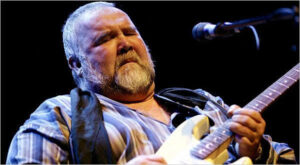
John Martyn (Scotland)
There are successful musicians.
Then there are musicians whose records seem to circulate almost exclusively among other musicians.
John Martyn belongs firmly in the second category.
Blending British folk, jazz harmony, blues, and atmospheric improvisation, Martyn created a body of work that ignored virtually every commercial expectation. His songs unfold patiently, allowing mood and texture to become as important as melody.
What distinguished Martyn was his refusal to separate composition from performance. His innovative use of guitar effects transformed accompaniment into emotional architecture, influencing generations of guitarists and songwriters alike.
Artists including Eric Clapton, Phil Collins, Robert Smith, David Gilmour, and numerous contemporary folk musicians have acknowledged his importance.
Martyn demonstrated that vulnerability could become a musical language all its own.

Judie Tzuke (England)
Commercial recognition has never adequately reflected Judie Tzuke’s stature among professional songwriters.
Her work possesses remarkable emotional intelligence without relying upon melodrama. Melodies emerge naturally from carefully observed lyrics, creating songs that reveal greater depth with each listening.
Many British writers point to Tzuke as an example of disciplined craftsmanship—proof that intimacy and sophistication need never compete.
Her influence can be heard throughout contemporary British singer-songwriter traditions, where emotional honesty increasingly outweighs theatrical performance.
Tzuke’s greatest achievement may be making subtlety feel unforgettable.

Richard Thompson (England)
Richard Thompson occupies an unusual place within modern songwriting.
His extraordinary guitar playing often overshadows the astonishing quality of his compositions.
Drawing deeply from centuries of British folk tradition while embracing modern psychological realism, Thompson writes songs filled with moral ambiguity, wit, heartbreak, and quiet resilience.
Few contemporary writers combine narrative sophistication with melodic elegance so consistently.
His influence extends across folk, Americana, alternative rock, and contemporary acoustic music, where countless performers have borrowed elements of his storytelling approach while rarely matching its precision.
Among songwriters, Thompson is often regarded as one of Britain’s greatest living lyricists.

Paddy McAloon (England)
The principal songwriter behind Prefab Sprout has long enjoyed one of popular music’s greatest reputations among fellow composers.
Ask accomplished musicians about Paddy McAloon, and conversation quickly turns to harmony.
His songs contain unexpected chord progressions, intricate melodic movement, and lyrics that balance intellectual curiosity with genuine emotional warmth.
Unlike many sophisticated writers, McAloon never sacrifices accessibility. His songs invite repeated listening because they continue revealing hidden structural elegance years after first hearing.
For younger writers searching for proof that ambitious composition can still produce memorable pop music, McAloon remains an enduring reference point.
His records have become something of a private curriculum for aspiring songwriters.
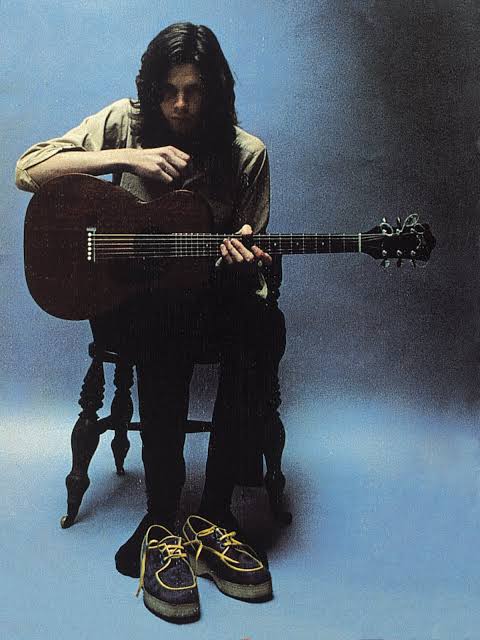
Nick Drake (England)
Nick Drake released only three studio albums during his lifetime.
Their commercial impact was almost nonexistent.
Their artistic influence has proven immeasurable.
Drake transformed quietness into a compositional virtue. His fingerpicked guitar arrangements, understated vocal delivery, and elliptical lyrics established an entirely new emotional vocabulary for acoustic songwriting.
Rather than explaining emotion directly, Drake created space for listeners to inhabit it.
That approach has profoundly influenced artists across folk, indie rock, chamber pop, and alternative music.
Today, it is difficult to imagine contemporary introspective songwriting without Nick Drake’s example quietly standing in the background.
The Invisible Curriculum
What unites these five writers is not commercial success or stylistic similarity.
John Martyn dissolved the boundaries between folk, jazz, and atmospheric sound.
Judie Tzuke demonstrated that emotional restraint could be more powerful than dramatic confession.
Richard Thompson elevated narrative songwriting into literary art.
Paddy McAloon proved that sophisticated harmony could thrive within popular music.
Nick Drake reinvented musical intimacy itself.
Each followed an intensely personal artistic compass, indifferent to prevailing trends. In doing so, they became a different kind of success story—not celebrities first, but craftsmen whose work earned the enduring respect of those who understand songwriting from the inside.
Perhaps every artistic field develops an invisible curriculum: a body of work passed quietly from one practitioner to another. Painters recommend forgotten painters. Novelists urge one another to read neglected authors. Architects keep private lists of buildings that changed the way they think about space.
Songwriters do the same.
Again and again, these names appear—not because they dominated the marketplace, but because they expanded the possibilities of the song itself.
The public often crowns the stars.
The stars, in turn, quietly acknowledge the masters who taught them how to shine.