The Quiet Architects of Europe’s Imagination: Five Artists Whose Influence Exceeds Their Fame
For every Pablo Picasso or Salvador Dalí, there exists another artist whose influence has spread more subtly—through classrooms, museums, architecture, public spaces, design studios, and the imaginations of younger creators rather than through popular celebrity.
Their names are familiar to curators, art historians, and practicing artists, yet they rarely occupy the broader public consciousness. And yet contemporary Europe—in the way it designs its cities, thinks about memory, embraces landscape, or understands abstraction—would be difficult to imagine without them.
Influence in the fine arts seldom announces itself. It seeps into culture over decades. An architect borrows a sculptor’s language of form. A public garden reflects a painter’s understanding of color. Museum exhibitions echo ideas introduced by artists who, outside specialist circles, remain almost invisible.
These five creators represent that quieter tradition of cultural transformation.
Giuseppe Penone (Italy)
Among Europe’s living artists, few have more profoundly reshaped contemporary ideas about humanity’s relationship with nature than Giuseppe Penone.
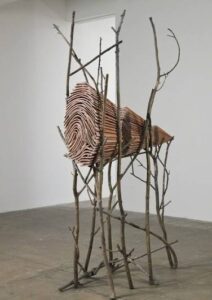
Associated with the Arte Povera movement of the late twentieth century, Penone rejected the notion that art should dominate the natural world. Instead, he invited viewers to witness collaboration between human intention and natural processes. Trees, leaves, stone, bronze, soil, and flowing water became partners rather than materials.
His sculptures often reveal the hidden life already contained within wood. By carving away decades of growth, Penone uncovers the younger tree concealed inside the older one, transforming sculpture into an act of archaeological patience.
Today, his influence extends far beyond galleries. Environmental artists, landscape architects, ecological designers, and public-space planners increasingly embrace the same philosophy—that design should reveal nature rather than conquer it.
In an era defined by climate anxiety, Penone’s work feels less like contemporary art than a quiet ethical proposal.
Howard Hodgkin (United Kingdom)
Howard Hodgkin resisted nearly every label attached to his work.
Critics described him as an abstract painter.
He insisted he painted memories.
The distinction mattered.
Rather than depicting people or places directly, Hodgkin translated emotional recollection into luminous fields of color framed by expressive brushwork. His paintings function less as representations than as emotional weather systems.
This approach profoundly influenced generations of painters who abandoned literal representation without abandoning personal narrative.
Today, contemporary European painting frequently occupies precisely this territory—where memory becomes atmosphere and feeling replaces description.
Hodgkin helped establish that visual language decades before it became fashionable.
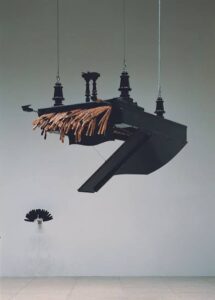
Rebecca Horn (Germany)
Rebecca Horn belonged to a generation of artists determined to erase traditional boundaries separating sculpture, performance, film, engineering, and installation.
Her kinetic sculptures breathe.
Mechanical wings unfold.
Machines appear almost sentient.
Yet the machinery never celebrates technology for its own sake. Instead, it explores vulnerability, isolation, desire, and the strange relationship between human bodies and the tools they invent.
Many contemporary immersive exhibitions owe an intellectual debt to Horn’s insistence that viewers should not simply observe art but experience it physically.
Long before “interactive installations” became museum staples, Horn imagined exhibitions as environments rather than collections of objects.
Her influence now extends into stage design, robotics, digital media, and experimental architecture.
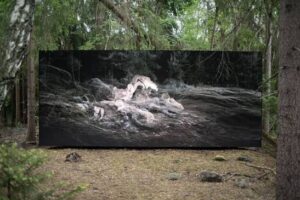
Pierre Huyghe (France)
Pierre Huyghe asks unusual questions.
Can an artwork continue evolving after the artist walks away?
Can living organisms become collaborators?
Can an exhibition possess its own ecosystem?
Rather than producing static objects, Huyghe constructs environments in which animals, plants, weather, microorganisms, architecture, and technology interact unpredictably.
The artist relinquishes complete control.
Visitors encounter not finished works but living situations.
This philosophy has become increasingly influential throughout Europe as museums reconsider their relationship with science, ecology, and public participation.
Increasingly, exhibitions resemble research laboratories.
Huyghe helped make that transformation imaginable.
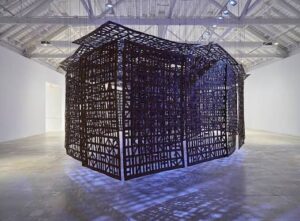
Cristina Iglesias (Spain)
Walk through many contemporary European cities and one encounters public art that no longer behaves like monuments.
Instead of commemorating historical figures, these works invite exploration.
Water disappears beneath latticed bronze.
Stone walls seem to breathe.
Architectural surfaces dissolve into intricate botanical patterns.
Much of this sensibility can be traced to the remarkable career of Cristina Iglesias.
Working between sculpture and architecture, Iglesias creates environments that slow human movement. Her installations reward wandering rather than observation.
She has demonstrated that public sculpture need not dominate civic space.
It can instead become part of the landscape’s rhythm.
Her influence increasingly appears wherever European cities commission artworks that privilege contemplation over spectacle.
Influence Beyond Recognition
None of these artists enjoys the instant public recognition accorded to Picasso, Matisse, or Dalí.
Yet measuring cultural importance by celebrity misunderstands how artistic influence actually works.
The most consequential creators frequently transform other artists rather than the public directly.
Giuseppe Penone helped redefine environmental aesthetics.
Howard Hodgkin altered how painters represent memory.
Rebecca Horn expanded the vocabulary of installation and performance.
Pierre Huyghe blurred distinctions between artwork and ecosystem.
Cristina Iglesias reshaped the possibilities of public sculpture.
Their ideas now circulate so widely that they often appear anonymous. Young artists absorb them in academies without realizing their origins. Architects borrow their spatial thinking. Museum curators build exhibitions upon assumptions these artists first articulated decades ago.
That may be the highest form of artistic success.
Not to become famous.
But to become foundational.
Europe’s cultural identity has always depended upon such figures—artists who quietly changed the way subsequent generations imagined beauty, space, memory, and the natural world. Their names may never become household words. Yet every visitor who wanders through a contemplative sculpture garden, enters an immersive installation, or encounters a public artwork that invites participation rather than admiration is, in some measure, experiencing the world they helped create.
Their legacy is not simply visible in museums.
It is woven into the fabric of contemporary European culture itself.