Hit Songwriter Rick Roberts Looks Back at His Life in Music
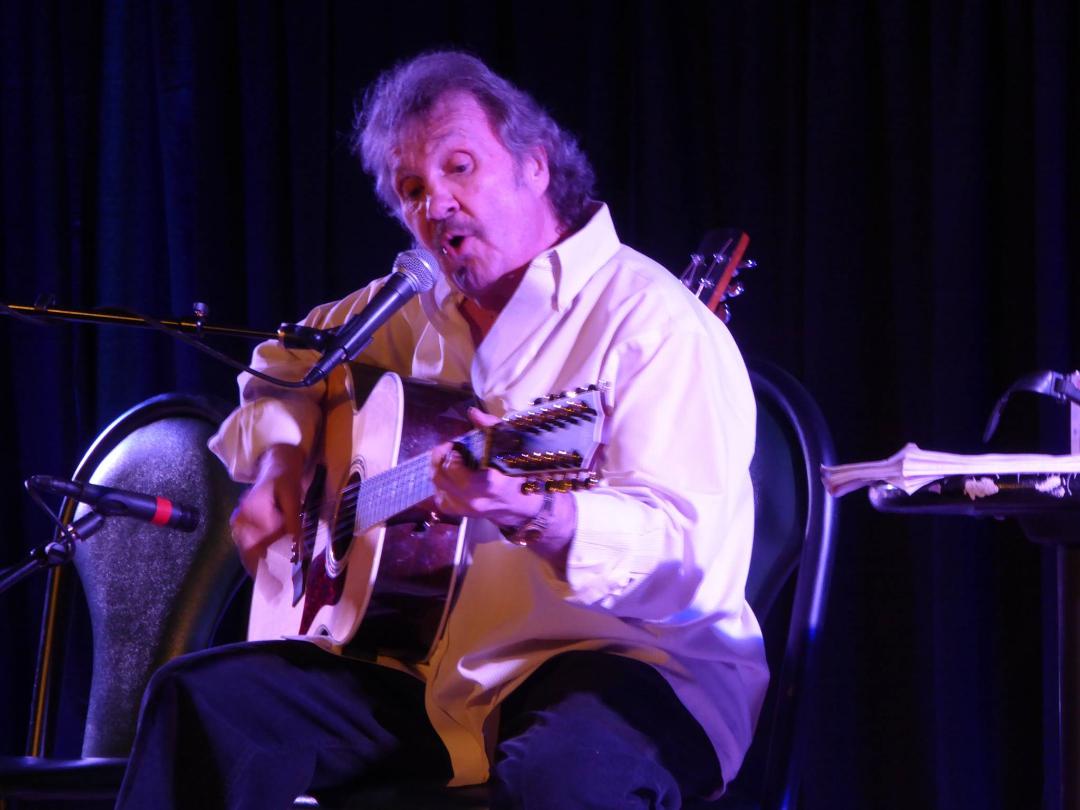
You may not realize that you have been hearing Rick Roberts’ songs for most of your life.
This interview was first published at www.RARWRITER.com in 2010.
by RAR
Back in the 1970s I was living in Boulder, Colorado at a time when that college town, home to the University of Colorado, was unusually rich with local celebrities. Jim Guercio’s Caribou Ranch recording studio was in operation, which attracted a string of international talent. Boulder had Northstar and Mountain Ears recording studios, both of which were attractive recording options. Stephen Stills and the guys from Manassas were around. Dan Fogelberg was there, and Richie Furay. I would occasionally socialize with Michael Clarke, who had been the drummer for The Byrds, and was then drummer for the Boulder band Firefall, which had initially been called Rick Roberts and Firefall, and was a top-flight band assembled by the former Flying Burrito Brother, who had been the Burrito Brothers’ replacement for Gram Parsons . Firefall included former Gram Parsons and Zephyr guitarist Jock Bartley, Mark Andes, the bassist who was known from the bands Spirit and Jo Jo Gunne, and David Muse, now with the Marshall Tucker Band. That only scratched the surface, actually, because there was a constant parade of notable players with pedigrees from name acts that came and went, and there was a lively club scene that attracted a rich cadre of “lifers”, i.e., club musicians who were highly advanced players and were going to be playing in nightclubs the rest of their lives. It was a musically sophisticated, somewhat high end, and certainly a fast-living crowd. It was professionally competitive in terms of musical standards, which gave it kind of a helpful edge, but it was also extraordinarily collegial on a social level.
On a social level, I was hanging out with a musical group of friends that would occasionally put me in the company of Rick Roberts, who I was always impressed with in that he was a big deal rock star and I was me, and yet he was always very pleasant and polite, somewhat reserved. I sensed that he was a sensitive dude and tended to like him, though I never really knew him. He was a part of an ethos that swirled around his band Firefall, which had launched to fame on the strength of some very catchy Rick Roberts tunes, excellent musicianship (with a particular nod to the guitar work of Jock Bartley and the multi-instrumental talents of David Muse), sweet harmony vocals, and right-on-time arrival in terms of the gestalt of the place and time. Firefall caught a wave that was certainly related to the aforementioned energy around Boulder having to do with the country rock revolution. (In fact, in the Archives of this site there is an extraordinary table that draws linkages between Firefall and all of the related acts of the era.)
The Firefall wave was interesting in that this was a band of musicians with previous experiences on the national stage, and in the Firefall breakout was another chance for them to enjoy this high level of success with the benefit of hindsight and perspective.
Michael Clarke, who passed away in 1989 and who was notable for his excesses, was emblematic of this Firefall ethos, this understanding that permeated the band. (This, after all, was a bunch of dudes who thought in terms of “Elan”, which was the name of one of their albums.) Michael used to repeat this line he had heard from another wizened soul, “Just remember that all the people you are going to meet on your way up are all the same people you are going to meet on your way down.”
Let that sink in for a second and you start to get a sense of who Roberts, Bartley, Clarke, Andes, Muse and Larry Burnett were, at least in my experience.
Just as a side note, I contrast that to a vibe I picked up from another Colorado notable of the time, ex-Byrd, ex-Flying Burrito Brother Chris Hillman, who produced Rick Roberts’ second solo album. I would occasionally run into Chris Hillman, as well, and I always got the feeling he was going to sucker punch me. No idea why, he just seemed threatening, and to this day he is the only person ever to decline an invitation to be associated with RARWRITER.com. (Well, that’s not quite true. Elizabeth Cook’s manager doesn’t like the site either, which probably leaves some of you wondering, Who is Elizabeth Cook? Well, there you go…)
Anyway, I recently had the pleasure of re-introducing myself to Rick Roberts, via Facebook (just for full disclosure), and the creative guy I first met 30 years ago is still very much the same, though he has been there and back, including a crippling accident that has become a slow and arduous recovery, including rehabilitation of his vocal cords and guitar playing muscles.
Rick Roberts wrote about that and a tremendously wide range of subjects that are provided in chapter form starting with this edition. These are arranged by general descriptions of topics that hyperlink to Rick’s responses. The questions provided to Rick Roberts are provided in full below, as well as on the response pages.
Early Exposure: Q1: To put changes in the music industry over the years into perspective, let’s talk about how you got your start. I seem to recall hearing a story once, that might have come from Producer Jim Mason, that you were “discovered” during a period when you were “busking” as a street performer? Is that accurate, or how did you initially break in as a music pro? As a follow-up, if the “busking” story is true, do you have any thoughts on how “getting out there” in that way might have been helpful to your development as a performer? Merchandiser?
Basically the story you heard from Jim Mason is true, but a little incomplete.
I started my attempt to break into recording when I was playing in clubs around Wash., D.C. A man approached me and said he thought I had a lot of talent, and he would like to produce a record with me. When I asked for more information, he said that his name was Paul Rothchild , and that he had produced Janis Joplin and the Doors. I was flabbergasted, but being 19 years old, and in possession of a healthy artist’s (and adolescent’s) ego, I was thrilled, and saw nothing unusual about this offer. The Doors, Janis Joplin, Rick Roberts….works for me. He told me he was based in Los Angeles, and currently working on another project, but if I could make my way out there, he would put me on a retainer, and when he was through with his present deal, we would get to work on my album.
I proceeded to hitch hike across country, which is a story in itself, and when I arrived in L.A., I went and presented myself at his office.
When the receptionist announced that I was there to see him, he said “Who?”. I was shown into his office, only to discover someone I had never laid eyes on. The guy in Washington had been an imposter!
Paul was gracious enough to let me play him a couple of songs, and then told me I definitely had potential, but that I was stepping into a different league now, and I needed some seasoning. I had no money, I knew no one in L.A., or so I thought, and really didn’t know what to do.
After that, a series of truly remarkable events took place, such as LITERALLY bumping into someone on the street that I had spent the previous summer with at a big house in the Shenandoah Valley along with several other hippies (it was the late ’60s). He let me stay with his family for a while, and I started knocking on record company doors. I spent almost a year doing auditions for about a half dozen labels, and nearly always got as far as them putting me into a studio for a demo. The next step was invariably one of three answers. 1. “You’re a good writer, but the voice isn’t quite what we want.” 2. “Great voice, but I don’t think the songs are there.” 3. “Good singer, good songs, but you need a band.”
During this time, to keep food in my stomach, and having long since left my friend’s house, I got permission to sit and play at the Free Press Book Store in Westwood, near UCLA, and bring my bucket. I was about ready to throw in the towel, and find another line of work, when another friend, who was a student liaison between UCLA and Columbia Records, convinced me to re-audition for a new A&R guy they had. His name was Alan Rindi, and after I played a couple of songs he said “Good singer, good songs, but you need a band.” He grabbed his phone and I started to pack up my guitar, when he looked over and said “What are you doing? Sit down.” It turned out that he was intending to GET me a band. He called Eddie Tickner, who managed the Burrito Bros., and explained that they had just parted company with Gram Parsons, and might be willing to back me on an album. When I finally auditioned for the band, it ended up not with them backing me, but instead with me joining the band.
In regards to the development process, I had learned by playing in the clubs in Washington that you weren’t necessarily the main reason the audience had come, and that was honed a bit in the bookstore where people were mostly there because Westwood was where all the first run theaters were, and people were just killing time ’til the movie was scheduled to start. I did learn more about how to project my voice, because I had no microphone, and it was a big store. Another lesson came in my early days with the Burritos, because I had always assumed that once you were “legit”, and playing in a real recording group, people would automatically pay attention, since they had paid money just to see you play. Imagine my surprise….
The second big learning phase came after the Burritos, when I was playing solo for a couple of years. I had the same agent as the Steve Miller Band, and he often booked me to open Steve’s shows. That crowd was definitely NOT there to hear an acoustic singer-songwriter, and since I didn’t even have a lead guitar player or anything to add another dimension, I became a pretty good story teller. That way, I could break up the show between songs and anecdotes, and an audience waiting to rock out would pay a little more attention, and not be as impatient.
Finally, in the area of marketing and merchandising, during that chapter of my career, and in the music business in general, only a few artists took on much of the responsibility for that. That was what record labels were for. Our major marketing tool was to go out there and knock the audience on their asses! Not necessarily by being loud, but by being really good. You could do that by rocking them, or as the soloists tried to do, just by capturing them with your voice or your lyrics, so that when they went home, they would remember their experience as something they wouldn’t be seeing on every corner!
It’s a brand new, and very different situation today. What with the changes caused by technology, almost every artist out there is much more aware of the necessity of promoting yourself. There is such a tremendous amount of music available, that it’s hard not to get lost in the shuffle. In my first go ’round in music, the only people who sold their albums at their own concerts were the old time country acts. Today, that’s one of the only places where people actually buy hard copy music, so almost every artist does it. It’s so much easier to just go on iTunes, and download whatever song or songs you want, without ever leaving home. I’m sad to see this happen, because I remember when people used to go buy an album, and spend their time pouring over the liner notes, and the credits, and getting a feel for what they were hearing and how it developed.
Music Now: Q2: Leaping forward now some 40 years… As a guy who has already lived the type of rock star experience that 99.9 percent of all aspirants never do more than dream about, does music represent something to you now other than what it once did before all the successes?
When I first got into playing music at all, I had just turned fifteen, and my greatest goal was to go over to Clearwater Beach on summer afternoons with a guitar, sit down on the pier, and play a couple of songs that would impress the pretty girls on the sand. About five years later, I was joining a recording group that had two of the guys I had grown up listening to on the radio. Obviously, in those five intervening years, there was a major shift in my viewpoint about what part music played in my life. But it was a slow and steady change, with some of the fundamentals remaining more or less the same. It was still in some ways, a step away from the center ring focus of my world, a dream just an inch beyond my reach. Artists were still completely under the control of the record labels, who had complete say so about whether you got to pursue the profession you had picked, or had to relegate it to a hobby, and hold down a “real” job. If you didn’t get signed to a contract, you didn’t get to make a record.
Because of the abrupt way I was introduced to music as a full blown career, my perspective on music went through some very sudden revisions. First of all, I never experienced the mutual common events that a band goes through as it works it’s way up the ladder together. I came in with a bunch of veteran pros who had been around the block by the time I graduated from high school. It was the classic good news/bad news situation. On the plus side, those guys already knew things it would have taken me years to find out on my own. It was a high octane learning opportunity. I also got to hang out with all these famous people, and that was informative, too, because I found out quickly that there was just as much diversity of intelligence and stupidity, kindness and mean spiritedness and every other human trait in these people as in any other group I had come across. Being creative and successful was no guarantee of any other quality. The odd thing is, there was a time when if I didn’t like the person, I found it harder to appreciate their music. These days, I find it easier to completely separate the two. And don’t get me wrong. There are a lot of really wonderful people in music. On the minus side, I was the new kid on the block, younger than most everyone I knew or dealt with, certainly less savvy about the ins and outs of things, and I was offered a wealth of opportunities to build my insecurity. But one thing most all of us had in common was that we genuinely loved what we were doing. We were still in that peace and love era, and although most of us realized that we were in a very fickle profession, and our financial well being was at stake, few of the players were the business whizzes that abound today. Most of us had not had the whole hearted support of our families, or maybe more accurately, most of our parents worried about us. A lot. We just loved playing music.
I can’t really speak for anyone but myself, but my love of music has never changed. What is different is that eventually, you see a little more about how certain things are accomplished, how some sounds are achieved, and you can’t help but acquire a little more clinical eye (or ear) when you listen to recorded music. The impact of the song itself can still move me just as strongly, but now I can dissect the production aspects a bit more clearly. I find myself filled with respect instead of wonder. That may sound like another mixed blessing, but I don’t see it that way. As long as the music itself can still mesmerize me, I’m satisfied.
New Recordings: Q3: Let’s talk about the process of recording music, which in your lifetime has evolved from audio tape to digital technology. You have four new songs available on iTunes. How were they recorded?
You’re right when you say the recording process has changed between the time I started making records and now. As I see it, it has actually morphed into an entirely different species. My first records were cut on vinyl, and then came 8-tracks and cassettes, but they managed to coexist with vinyl. When CDs came along, they became the primary medium, and the record companies stopped making “records” altogether. The switch from analog to digital, which is the very root of the process, is a whole new ballgame altogether. From what I understand though, vinyl is currently making a strong comeback. This makes me very happy, because in my opinion, vinyl is to the CD disc the audio equivalent of what 3D is to regular movies. It just seems to bring more depth to the sound. For me personally, the changes have a lot in common with stepping onto a moving treadmill or the kid whose dad teaches him to swim by tossing him into the deep end of the pool.
When I left and Firefall broke up, my intention was to leave Colorado, go back to L.A., and take another shot at going solo. Being in a band is very demanding, both physically and emotionally. You’re always trying to maintain that balance where everyone in the group gets to contribute his best, and share his views, both musically and personally. Sometimes that is very difficult. When I got back to L.A., my lawyers dropped a bombshell on me. It seems that when Firefall set up its financial structure, it did so as a partnership, rather than a corporation. Remember what I said about financial whizzes not being as common among musicians back then? What this meant was that Firefall’s creditors, and there were quite a few, could try to recoup their money from whoever they thought most likely to have it. As the primary songwriter, that was me. My lawyers told me not to sign any contracts, and to generally just lay low for a while. This put me into limbo for a while. I did form a band with Randy Meisner, the original bass player and vocalist for Poco and The Eagles, called (coincidentally) The Roberts-Meisner Band. We toured around the country for a while, but then Randy got an offer he couldn’t refuse from Poco, who wanted him to rejoin for a reunion tour. We renamed ourselves The Rick and Famous, but things began to disintegrate. In addition, I had reaffiliated with a reformed version of Firefall, and was commuting part time between L.A. and Boulder. When The Rick and Famous finally broke up, I decided to move back to Colorado. By this time, I was drinking way too much*, and I eventually left Firefall as well. I met a wonderful woman, and finally got married in 1993. All these things combined to convince me to at least semi-retire at that point.
Now here’s where the deep end of the pool stuff starts. Around 2005, I was getting extremely restless, and I wanted to put some new music out. I started making my initial plans, but then an unexpected wild card came into play. One day I slipped on a throw rug in our home, and hit my forehead on the corner of the kitchen island. I suffered what is officially known as a subdural hematoma, but what we common folk call a brain hemorrhage. I couldn’t walk for sixteen months, and eventually went through the progression from wheelchair to crutches to walker to finally walking free again. As you can imagine, this put kind of a crimp in my comeback plans. The good news is, my wife stuck with me through it all, and we celebrated our seventeenth wedding anniversary on May 23rd.
When I had sufficiently recovered, I went back to my plans to put out some new music. That was when I found out THINGS HAD CHANGED!!! When I had last recorded, the change from analog to digital was in its early stages, and not every studio had made the switch. Analog was the process I was more familiar with, and had always used. Now as I started again, EVERYTHING was digital and I found I was not fluent in digitalese. Fortunately, the new songs I have recently released were recorded a while ago, so in reality, they are not so much new songs as they are unreleased songs. The songs with a full band were, I believe, done digitally, but the engineers didn’t make a big deal of it, or even bring it up unless you asked them. Since my focus was on writing and performing the music, I was able to cruise along merrily, blissfully ignorant of what the engineers were up to in the control room. As long as the end result was what I had envisioned, I didn’t have a problem with it. The technological advances have made me completely reeducate myself about what can be done now, that we couldn’t do before. I’m still trying to get beyond the designation of “rank amateur”, but I’m learning.
*I finally got wise a few years ago, and put the bottle down permanently.
Digital Technology: Q4: The first album I can recall that was recorded entirely with digital technology was Ry Cooder’s Bop ‘Til You Drop (1979), and I recall a lot being made out of the “clarity” of the recording, though soon enough people like Neil Young were criticizing digital sound quality. Were you open to the changes taking place back in that period? And could you sense the magnitude of what the digital age would mean to the music industry?
The change from analog to digital, as I mentioned before, was just taking hold in the industry when I went on my “hiatus”. There are, and were, new innovations on such a regular basis, that at the outset, not everybody realized that this one was a whole lot more than just another new toy, which might briefly make some ripples, and then pass quietly into obscurity. Most of us who had been around for awhile had seen a number of new items that promised to “change the way we listen to music forever”.
Remember surround sound? Quadraphonics? The list goes on. Not to say that those things don’t retain their own niche in the music world, but we’re not really talking game breakers here. On the performance side, there were always new artists looking for a little something to give them an edge. I was there for the invention of the “fuzztone”, and the “wah-wah pedal”, and any number of quickly clichéd items. For a moment, they are something new and different, but all too soon they have been done to death, and are more often than not, something that makes you want to grind your teeth every time you hear them used again. One of my personal anti-favorites, the name of which I forget, was that little darling that consisted of putting a tube in your mouth, and singing the guitar part. I think it was a first cousin to the wah-wah. Now that I think of it, my inability to remember its name may be selective memory at its best. What I’m getting at, though I can’t speak for anyone but myself, is that I had gotten a bit jaded about the likelihood that some newfangled audio trend would turn the whole music business on its ear! In answer to your question, it was plain that something WAS catching the attention of some very knowledgeable people, but as far as whether I could see the writing on the wall, or predict the immense affects that were coming, no. I also want to add that while I say I was a bit cynical, I don’t mean that I was not open to change. Anything that could legitimately make the recording sound better, and truer to the source, would have had my endorsement. By the same token, I am not a fan of recordings that have been sanitized of every tiny flaw, so that they can be technically perfect. Those little breaks in a voice or a fudged note on the guitar are what keeps the humanity in music, and separates it from something that a group of androids could present, unblemished, night after night after night. We’re talkin’ SOUL here, buckaroo!
And last, you mentioned the discussion concerning sound quality. As far as I can tell, there is still some difference of opinion about that. As I said in answer to another question, I personally believe vinyl provides, in some subtle way, more texture to the sound. That could simply be me hearing what I choose to hear, or some subliminal longing for “the good old days, when life was simple”. Remember, I’m not seventeen anymore.
Music Industry Changes: Q5: Following that train of thought, how do you feel the music industry has been changed by the digital age?
I know that the accelerated growth of technology has fundamentally changed nearly every field of industry, but in music it has created an entirely different cast of characters, both on the manufacturing end and on the merchandising end. The whole game is being played with a new set of rules. I mentioned before that prior to the switch to digital technology if you didn’t get signed by a record label, you were almost never able to put together a record. The cost was simply beyond the means of anyone else. It required paying the cost of a recording studio or having your own recording equipment. And we’re not talking about a reel to reel mono track tape recorder. We’re talking multi track units with a mixing capability and someone qualified to operate it. Then of course, you would have to have a studio, or sound proofed room to set yourself up in, and…..oh, this is silly! It’s obvious that very few people other than the record companies had the resources to finance a quality product. They basically had a corner on the market.
There were, of course, exceptions. Nearly everyone has heard of how the group Boston made their first album in Tom Scholzs’ basement. But then we come to the next piece of the equation. Manufacturing. Even Boston had to submit their tapes to an established company with the dollars to pay for having the music actually transferred on to vinyl en mass. After that we come to marketing. Someone with the field reps to carry the album around to radio stations, and convince the DJ’s to listen to it, and put it on the air for a trial run. The whole process usually cost at minimum, from concept to completion, fifty or sixty thousand dollars. Of course, once again, there are always exceptions. But for the most part, that was the kind of money you were looking at, at least in the days after rock ‘n’ roll had become big business. With the shift to digital, and the technology that created it, all bets were off. First, in the matter of actually cutting a record. The new tech created equipment that was affordable to almost anyone, so people started making their own records in their brothers’ garage. There was also a lot of new stuff out there that made mixing a record and all the other little niceties that once took a skilled and experienced hand into almost child’s play. That caused a complete flood of material created by anyone who thought they had talent, or that there was a chance they’d get lucky. That hasn’t really solved the problem of marketing, at least as far as radio exposure is concerned. With so much music available, it’s harder than ever for anyone without a merchandising network behind them to get their music on the air. Manufacturing is also still a concern, but not so much, because there are companies out there who specialize in what they call “short runs”, which means cutting about a thousand units. Then you take those, try to get them to DJ’s, and hope for the best. Good Luck.
There are other major changes in the system which have had an even bigger impact on the way things work. Suppose you do make a record, whether you do it yourself, or you sign with a record label. You get it on the air, one way or another, and people like it. Do they go down to the record shop and buy your album? Not from what I’ve heard. They go to iTunes, CD baby, or one of the other internet providers, and cherry pick the song or songs they have heard. I have several friends who own record stores, and they told me that unless I was going on tour soon, I’d be better off just releasing my music online. They told me that the primary place artists are selling hard copy albums is at their shows.
Meanwhile, record labels are going belly up everywhere you look. I’ve been told that when the wunderkind of computer tech came to the record company bigwigs at the outset of all this, and suggested some sort of deal, where the labels and the proposed outlets would share the expenses of setting up such operations and then divvy up the dough, the record companies blew them off, thinking they were too big to fail. This is second hand information, but it sounds about right.
Once again, I can only speak for myself, but in a much more general way, the listening audience has changed, too. I decided that rather than put out a whole CD sized set of songs, I would release four songs at a time and do it a little more frequently. My reasoning was that there are less people with an interest in spending the time to listen to a whole album. There has always been a tendency to end up with a few really good songs getting lost in the shuffle, but with so many people now cherry picking song by song, more good music tends to fall through the cracks.
Computer Literacy: Q6: Are you “computer literate” and comfortable with digital production? To what extent have you personally embraced the evolution of digital recording technologies?
As I’ve said before, I’m still a babe in the woods regarding the new technology, and the possibilities it offers. At the recording end, I not only welcome it, but am personally very grateful for the doors it is opening for me. Among the twenty or so unreleased songs that I already have recorded, about half were done in the usual way, which is to say building from the basic track (usually drums and bass first, with a rough vocal and guitar track to work around), and then adding slowly to the mixture with the keeper rhythm guitar part, keyboards in some instances, percussion and whatever else you want to use to dress it up, and finishing with the lead instrument solos and the keeper vocal and finally any harmonies, or fine touches. This order is very flexible, and often subject to alteration from song to song, and with different artists, a personal checklist of what comes in what order. And sometimes, the work version of the vocal or any other part turns out to be the keeper, because of that human element I talked about called soul. Sometimes when you just get out there and blow it out, it’s not gonna’ get any better!
The other half of the songs I intend to put out were done as publishers demos, with just my acoustic, my voice, and the song itself. Fortunately, I’ve always been vain enough to make sure that even my “demos” were performances I wouldn’t be embarrassed to have other artists hear. What I mean is, I tried just as hard for a finished product as I would have if it were going straight to the pressing plant. Before digital tech, you had to start at the bottom, and build upwards, but now, with all the new electronic gear available, you can start at the top and go backwards. So I’ll be able to take my bare bones guitar-voice-song demos, and build a track around them. That’s definitely something I can live with. A few of my songs, I plan to put out just as they are, because I don’t think they will benefit from any embellishment, like the song “Like An Angel” on this first release. Others, I believe, are good songs, but can be improved by adding a little mustard (or onions, if you prefer). This is especially useful to me, because one of the results of my brain injury was a slight asymmetry in my vocal chords. If you don’t understand how the one relates to the other, don’t worry, neither did I. It turns out that your larynx, even though it is basically a muscle, is directly affected by any nerve damage in the brain. I’m lucky, because my damage is minor, and like the relearning to walk process, is only a matter of reprogramming the brain. They assure me I’m totally fixable. This is actually pretty cool, because they say we only use 15% of our brain, so there’s a lot of working room. And who knows what this might lead to. I could end up being able to move furniture with my mind!
Digital Impacts on Artists: Q7: The digital revolution that has occurred since you released your first album with the Flying Burrito Brothers in 1971 has had huge impacts on how music is produced, recorded, marketed and distributed. What impacts have you felt as an artist from these technological developments?
Editor’s Note – This question was answered amid previous responses.
Digital Audience: Q8: I often feel that the natural ease with which young people integrate digital communications technologies into their everyday lives has a profound influence on the type of music they relate to. It seemed to me that this became most apparent in the New Wave period of the ’80s with people like Thomas Dolby, the Thompson Twins, and a personal favorite, Nina Hagen, and that techno sound is still apparent today in Lady Gaga, Ke$ha, and a thousand other similar artists. Tools like the T-Pain voice changer can be downloaded for anyone’s use. My long-winded question is this: What can a guy who came up in the analog age do to be relevant in a digital world so influenced by the latest gadget?
I think you’re right about the dovetailing of everyday elements of people’s lives influencing their tastes in music. It’s almost as if the music that resonates with a person is some kind of subliminal echo of the way people are viewing the world. I’m not looking to get too cosmic here, but in these last couple of decades, we’ve seen a profound change in the way people function in the world. When my generation was growing into adulthood (think baby boomers), we were caught up in hippiedom, peace, love, and fellowship. The music reflected that with artists from The Beatles to The Byrds, Buffalo Springfield, and a host of others. The music gathered in some of the values of folk singers, but with a better beat. They set a whole new standard by writing their own music, and doing something that was reasonably rare prior to the “British Invasion”. They made record albums that required every song to stand up on its own. Before that, most albums consisted of the band’s current single, their next single, and maybe one more wild card, but the rest was pure filler. With the ’60s, the subject matter of the lyrics expanded dramatically, because people were listening to the words. The next musical generation brought us artists like Joni Mitchell and James Taylor, Crosby, Stills & Nash and so many more. But there was still a strong emphasis on the content. I’m not forgetting about bubblegum music, which never really went away, because after all, we’re talking about a primary audience of teenagers. Rock & Roll grew up a lot during that time, and diversified greatly. You had geniuses as far apart as Peter Gabriel and Jackson Browne, or The Eagles and Steely Dan.
Things began to look markedly different with the onset of Disco. Suddenly the words took a distant backseat to the beat. If you couldn’t dance to it, it wasn’t gonna’ sell. A whole lot of electronic gadgets started to get put into use at that point, because nobody syncopates like a rhythm machine.
I spoke about the music being a reflection of how people feel. In terms of disco, I feel like a lot of people were starting to feel like they just wanted to stop thinking, at least for a little while.
But at the same time, computer technology was invading every one’s lives in a hundred ways. The first album I remember sounding like the new electronic world felt was “I Robot”, by the Alan Parsons Project. It was the audio equivalent of that movie “Tron”. I kind of felt like I was on the inside of a computer. Don’t misunderstand. I love that record! But it did have that busy buzz that seemed to be going on all around.
That’s my long-winded preface to my answer to your long-winded question.
I said all this because my actual answer needed the setup. In my opinion, a funny thing has happened while all this other stuff was going on. The baby boomers seem to have decided not to give up their music. I know that generations before the boomers remain loyal to the music of their own youth, but I don’t think any of them have remained as actively involved with their favorites. You only have to look as far as the amazing number of “Classic Rock” stations to see what I mean. What I like about it is how often people tell me that their kids never heard of most of the bands I grew up listening to, or the groups from my own time. But when the parents get the kids to listen to us, they say the kids like it. A lot. A whole lot. I hear that they always tell an aspiring author to write what he knows. So I guess my best option is to keep singing and writing what I know.
DIY Ethos: Q9: Our friend Chris Daniels has written about the “Do It Yourself” ethos that now exists among young musicians who use the tools provided for the Internet and digital communications to manage their careers in ways that have only been possible for a relatively short time. Back before you broke through with the Burrito Brothers, were you thinking a lot about career development, marketing and promotions the way kids do today? What did you do to promote yourself back in 1970?
I tend to agree with Chris about the new approach so prevalent in this generation of musicians. They’ve been given a wealth of new tools to work with, and the more enterprising among them are taking full advantage of the wider range of available options. That way, they eliminate some of what might be just more complications between where they are, and where they want to go. When I first got serious about shooting for a career in music, my goals were probably about the same, but the ways to get from point A to point B were much more limited. As I said in some of my earlier ramblings, there was a much greater concentration of power in the hands of the record companies. To sustain a career, the necessary first step was to get the attention of a label, and hopefully secure a contract. Once you had a contract in hand, your main consideration was to make a good record. Personally, since I started out with the intention of being a soloist, my focus was on writing the best songs I could, and constantly working to get better at it. I believed I could sing, although early on, though a lot of people told me that my voice was too “pretty” for rock ‘n’ roll. It wasn’t until much later that I had realized that a voice is an instrument that takes just as much work to get better on as any other. It also seemed to me that the promotion, marketing, and development of my career would be taken care of by the label, my agent, and my manager (and for the megastars, a good PR team). When my situation changed from soloing to being a member of the Burrito Bros., I still thought that every other area except for the music itself was somebody else’s responsibility. I was pretty naive. In a perfect world, my view on the musicians only responsibility being the music might have held water, but we all know this ain’t no perfect world. A good manager, a supportive label and a clever, imaginative agent could boost your career and your visibility a lot, but if you didn’t keep yourself involved with every aspect, those same players could bring your ride to an early conclusion. A lot of that was the result of the fact that, even when the musicians themselves were not driven by a sense of competition, or an urge to win at any cost, which some were and some weren’t, the record companies were a business, pure and simple. Some of the businessmen really loved music, but some only saw the balance sheets, so if you sold, you stayed. If not, you tried not to let the door hit you on your way out.
Today, with so many new artists knowing so much more about the fact that they are in a business, and so many additional tools, they can exercise more control over the direction their careers are taking.
Now, with all that said, permit me to contradict myself or at least qualify a few things. It’s not that I don’t believe what I’ve said, but more the fact that any area of the arts is an incredibly unpredictable line of work. First, you have to get a chance to show what you can do, before any of the other things even come into play. Second, tools not withstanding, if you do get a chance, the best promotional tool I know of is to make great music. Third, this is a very complicated job to handle, and if you’re not careful, it’s easy to try to take charge of too many things. If you can hook up with people who care about you and your music, are honest, and accomplished at their particular areas, you’re crazy if you don’t do it. A really quick way to fall flat on your butt is to think you know more about everything than anybody else does! One of the best things to know, is just how much you DON’T know!
Communications Technology: Q10: Comparing your present sense of the music industry with how it must have felt to you at the beginning of your career, do you find it a bit overwhelming that communications technology today make so apparent how large the group of people competing for public attention is? Have you devised any particular strategy for breaking through?
Before I actually answer this question, I want to tell you about something that happened to me today, because it plays into my answer on this one, and on the last one, too. And it says a lot about how pervasive technology has become in both music, and everyday life.
I took my Subaru into the dealer today for some repair work. It’s only a couple of years old, but it needed some things done which will take several days. So they gave me a loaner, which was fresh from the factory, like they usually do. I don’t know if this other stuff is a new thing, or if I’ve been living in a cave. I just know I hadn’t seen it before. I turned on the radio, and on the visual display, it not only showed me the call numbers of the station (old news), but the call letters, the name of the band that was playing, and the name of the song. THAT I hadn’t seen before. Obviously, the DJ, or the programming service for the station was supplying the information, because it came up with the first note of the intro. To the best of my knowledge, they haven’t come up with the computer capable of identifying a piece of music on the basis of one note. Very few musicians can do that, except sometimes with their own songs. On one hand, I was elated, because ever since stations started playing blocks of songs in a row, they have been less diligent about logging in the name of the artist, or the name of the song. If you’re listening in your car, you often get where you’re going before you find out what you just heard. I’ve occasionally tried for weeks to find out the info of some song I really liked. On the other hand, the whole concept was kind of creepy, in a Big Brother sort of way. This all knowing machine with everything you ever wanted to know just sort of plopped in your lap. Like a non-verbal HAL-5000.
Anyway, this reinforces what I was saying about the plethora of new toys and gadgets out there that were never there before. It seems to be hovering very close to the edge of “too much information”.
Now that I’ve got that off my mind, I’ll try to answer the question. I think that there were almost as many people out there competing for the spots available back when I started, but the biggest difference is visibility. Now that cutting a CD is so much easier to do without the need for financial assistance, more people can potentially get their product out there. With all the online outlets that are willing to let you pay your fee, and get put on their (incredibly huge) rosters, every garage band who’s been together for at least a month figures it’s high time they got an album out there. I guess there are a larger number of groups and artists getting some airplay, and exposure, but the shear weight of numbers makes it harder to really have an impact for most acts unless they already have a fan base. I do think there is some increase in the number of people starting out with the intention of making a career out of music, rather than a teenage sideline, because just like professional sports, it has grown into a respectable pursuit that some adults start training their kids for from the outset. Just the same way they used to point their kids in the direction of being a doctor or a lawyer. Follow the money. And usually, that seems pretty cool to the kids. It doesn’t require as much book learnin’, and it looks a lot more glamorous. I’ve been told more times than I could count about how neat it must be, being up there on stage, and what a wonderful, exciting thing touring must be. I totally agree that those ninety minutes are a real rush. The problem is, there are twenty two and a half more hours in every day, and you spend most of them getting from one place to another, grabbing a meal when and where you can, changing time zones even when you’re lucky enough to be able to fly to your shows (which leaves your body clock very confused), and consistently being short on sleep. That part’s not quite as much of a rush.
As far as “breaking through” is concerned, that would seem like an increasingly difficult thing to do these days, what with the increasing number of acts who do have product out there, one way or another. I’m lucky enough to have a fairly lengthy track record under my belt, and I’m counting on the fact that several of my songs continue to get a lot of airplay, even after all this time.
I don’t really know what advice I would have for a newcomer at this point in time, although the universal rule has always been the same. Try to present something fresh, that nobody else provides. A lot of people have taken this to mean that you have to be more outrageous than anyone else. That’s not what I’m talking about. “Fresh” is not the same as over the edge. What I mean is doing something that raises the bar.
You know, I’m writing this, and part of my brain is saying “Yeah, right! Who’re you tryin’ to kid? If that’s a universal rule, it’s been suspended.” The other part of my brain simply says “That’s my story, and I’m stinkin’ to it.”
New Audience: Q11: Who do you perceive your audience to be for the new music you are releasing?
Over the years, my affiliations have kind of wandered around, starting with the Burritos, who were on the country edge of country-rock. My solo stuff, I am told, had elements of country, folk-rock, and pop. Firefall, due to the presence of myself and Michael Clarke, who had played in the Burritos, plus the fact that Jock Bartley had come to people’s attention while playing with Gram Parsons, was labeled as another country rock band. That label originated mostly with promoters, who made their assumptions from former affiliations. One of the first tours we were booked on was opening for Willie Nelson, and Waylon Jennings. The dates were mostly in Arizona, New Mexico, and Texas. We were most assuredly not a country band, and believe me, the audiences in the Southwest made it VERY clear that they didn’t think so either! In fact, some of the long time Burrito Bros. fans were very upset when I took Gram’s place, because they thought I made the band sound too main stream pop. Initially, we were going onstage after Asleep at the Wheel, and after about four shows, we asked the promoter to please let us open the show, before a lot of the hard core fans got there. This was mainly for our physical well being. Firefall got pegged by having such a big hit with “You Are The Woman”, followed by “Just remember I Love You”, as a soft rock, pop band, but when people saw us play, they found out that live, we were more a straight ahead main stream rock band, with harmonies. Jock was a tremendous rock guitarist, who took over for Tommy Bolin in Zephyr before playing with Gram. Add in David Muse on sax, who was anything but country, and closer to jazz than pop, plus Mark Andes, veteran of the rock based Spirit and JoJo Gunne, and it was quite a mix. The final element was the other main songwriter, Larry Burnett, who was an amalgam of several styles, but over all, just a flat out good singer and songwriter.
I’m starting to get some feedback about the about the new set of songs I’ve put out, and one thing I’m seeing is an affirmation of something I talked about before. The generation of music fans I came from have not given up their music. Since I’ve been involved with several kinds of musical genres over the years, I’m hoping to attract some people from several different areas. I’m counting to some extent on people who are already familiar with some of my music to jump start a little interest among those who aren’t.
Songwriting: Q12: How do your songwriting skills match up these days against those you exhibited in the 1970s with chart-topping hits? Are you a different writer now?
I feel as though my songWRITING skills are intact, and I continue to come up with some lyrics that I’m pretty happy with. Right now, what’s not up to par is my songPLAYING skills. An additional result of my brain injury has been relearning brain command to muscle response. That was why I had to relearn to walk. It’s not like the aftereffects of a stroke, because there’s no paralysis or anything like that. It’s more just that reprogramming thing. I’m basically learning to play all over again, and training my strumming hand how to do certain rhythms. It’s kind of like my brain says to my arm “do this”, and my arm says “you talkin’ to me sucka’? “. Like learning to type; even when your mind knows the keyboard,your hands don’t.
Musicianship: Q13: I am always interested in the relationship between a songwriter and his or her instrument(s). How much of your focus do you apply to your musicianship? How does it impact the way you write? And has this changed over time?
I’m left handed, and I play right handed. Even my most loving, polite friends, and certainly my band mates over the years, have made it very clear to me that I have never caused Jimi Hendrix or Eric Clapton any loss of sleep. A dear musical peer once told me that I got more out of less than anyone he had ever known. To the best of my knowledge, he meant that as a compliment. I do love my instruments, solely on the sounds they make. I certainly don’t have, nor have I ever had, the ability some people are blessed with, to make a guitar sound like the voice of an angel. It has had an affect on the way I write, both by utilizing different voicings of certain chords, and by inventing my own chords or tunings. Maybe not inventing them, but using tunings other than standard when it seemed to enhance the sound. Since I’m currently more capable of writing lyrics than of coming up with new chord progressions and melodies, I’m very lucky to discover that I have accumulated a whole lot of unfinished songs that got pushed aside because I was focused on another song already. Now, I already know what the musical structure of each one is, and I can concentrate on finishing the story. It might sound a little weird, but it has made me look in a new direction for inspiration. And I am working my way back on the guitar.
Historical Constraints: Q14: As a guy who was there at the birth of “Country Rock”, and by virtue of repeated airplay on classic rock stations is forever associated with that sound, do you feel constrained by your history? Are you able to stretch out into other types of music, or is that of interest to you? What would you like to do as a songwriter that perhaps you haven’t to date?
I’ve always loved a lot of different types of music, some of it a long way from what I write, and maybe the fact that it is so different from what I do is part of the attraction. Just today, I listened to an album I hadn’t put on in years, and remembered that that it’s still one of my favorites. In spite of being waaaay removed from my type of singing or songwriting, I’m talking about the Genesis album “The Lamb Lies Down On Broadway”. I don’t think I would want to try to do something like that, but it’s not a matter of feeling locked into my reputation, or some image. It’s a lot more based on the fact that I’m pretty sure I couldn’t do something like that. I also don’t feel that anything is missing in my life because I’m not doing any rap music. Basically, I like doing what I do, and think what I’m writing is the best avenue for me..”
Songwriting: Q15: How often do you write songs?
It’s hard to answer that question with any accuracy, because it varies wildly. There have been times through the years when I’d get on a roll, and was coming up with so many ideas that I’d have to keep a little cassette player in the room, and just toss on a verse or a chorus, or even an idea, and then go back to whatever song I was working on. If I let myself get side-tracked for any length of time, I would lose the thread or the (boy, I hate to use this word) magic of the piece I was into. Keeping the spark going is really essential. I found out the hard way that if I got an idea at 3am, right in the middle of a sound sleep, it didn’t work to jot down the basic premise and start writing in the morning. I even tried writing down the proposed chord progression, or whatever snippet of lyric I had dreampt, or any other abbreviated reminder so that I could go back to sleep and go to work when the sun came up. No go! The only way to do it was to get up right then, no matter what time, and start putting it together. If I didn’t, when dawn came, it came by itself. As I was saying in answer number 13, that is turning out to be an unexpected bonus, because I have all those fragments to work with. The odd thing is, that coming back to a fragment after all this time, I find that often, it’s like I just had the idea, so it’s fresh. Or maybe the piece I’m starting with inspires a whole different train of thought, and the song I start writing is entirely different from the song I had in mind way back when.
That’s one side of it. There have been other times when I’d rack my brain for what seemed like a lifetime, and come up bone dry. Nothing seemed to spark a reaction in my imagination. Somehow, the idea of taking say, a year, thinking how many songs I’ve written over that time, and dividing those figures to come up with an average, doesn’t quite feel right. It doesn’t work quite the same as a shortstop’s batting average.
There is another thing. Just to be candid, things were very different in the ’70s, especially in the music world, and definitely in Boulder, Colorado. A lot of people were doing a lot of cocaine, and I was right in there. For many, the routine centered around doing some lines, and then partying down. For me, the main urge was to get to my guitar, and start writing. I admit that I wrote some of my biggest hit songs when I was wired to the gills! So some of my writing binges were closely intertwined with sniffing binges. Not always. Trying to use coke as a door opener was an on and off proposition. And the time came when chemical stimulation no longer equaled creative stimulation. That was when I stopped sniffing. Funny thing is, I found that my writing rhythm was pretty much the same. Sometimes a lot of ideas, sometimes none. It was also a lot easier on my pocketbook and my body.
In more recent years, I found myself writing a little less, and then for a while, not writing at all. Then I started getting ideas again and started writing some, though not as much as I did once upon a time. I think a lot of that had to do with the idea that, unless I had something different to say, or at least a different way to say it, I would just be repeating myself. I can remember having a conversation with a friend one time. We were discussing a well known composer, and my friend said he thought that guy had written five of the finest songs he had ever heard………over and over and over. I don’t really want to do that, if I can help it.
Currently, as I spoke about earlier in my ramblings, I am relearning to play my guitar effectively. With that in mind, having these fragments to work with is kind of neat. We all change to some extent as we go along, and what a piece of lyric might have meant when I first thought of it might not be what it means to me now. That gives me a better chance to write a song I haven’t written before. That works for me.
How Do You Write?: Q16: Do you write songs in a calculated way, developing them with any particular sense of airplay in mind, or do you just write as it you are moved to?
Occasionally, when I have gotten an idea for a song, or more frequently when a catchy phrase has popped into my mind along with some sense of what kind of melody would suit it, I’ve consciously tried to point it in a commercial direction. The same thing is true when I’ve come across a particularly hummable tune. I won’t try to claim I’m above taking a shot at the charts. A good example is “You Are The Woman”. When that chorus and tune jumped into my head, I realized that what I was creating might not rank as one of the great works of art in history. I saw it for what it was. A bouncy little pop ditty. To be honest, I was stumped for several months about where the verses should go lyrically. Then I realized I was over thinking it. I took a more simple approach, and the verses were finished in a day or two. It’s not even close to my favorite song among all those I’ve composed.
But that’s not usually the way it works. Much more often, the idea for a song kind of sneaks up on me. I feel like there’s something bothering me, but I’m not sure what. It’s a little hard to explain, but it’s kind of like when you glimpse something at the edge of your vision, but when you try to look at it, it slips away. Then gradually, it begins to take shape, and suddenly an idea appears fully formed. At that point, I know what I want to say and I just have to find the right way to say it. Sometimes the words flow out almost without any conscious effort, and other times I have to fine tune them over and over, changing just one word or one line, or even finding that for the continuity of the thought , a couple of lines work better if I have them trade places. It’s never quite the same for any two songs. If you recall, I spoke about sometimes getting on a roll where I had several ideas all at the same time, and had to put just enough on a cassette so they didn’t slip away, but didn’t interfere with my focus. On those occasions, it was a whole other scenario, because if I wasn’t careful, one idea would bleed over into the next, and everything would get tangled together until nothing made any sense. If this all sounds confusing, it’s probably an indication that you’re in good mental health. Because it is all very confusing. In the same context that nothing is constant except change, in my songwriting, the only pattern is a lack of pattern. One song that I wrote, and is one of my own favorites, is called “Dolphins Lullaby”. I had the melody in my head, with the chords, for months. I just couldn’t think what the music suggested to me. Sometimes what is obvious, even to yourself, you still can’t seem to see. I kept playing the music for my friends,telling them I was baffled for a subject and saying, “It’s almost sounds like a lullaby”. Then one morning I woke up and said to myself, “You IDIOT!! If it sounds so much like a lullaby, well then, write a lullaby”. Another song, “Just Remember I Love You”, had a lot of success, and I like the lyrics. I wrote that in one night. Of course, I had some motivation. I had been on a writing spree, and the woman I was involved with was getting a little short on patience. When it was time for bed, she said, “Well, are you coming to bed, or are you just going to spend another night fooling around with your guitar?”. She was not happy, and I knew I was in serious trouble. I figured my best chance was to have something worthwhile to show her in the morning. “Just Remember” was my airbag. You asked about writing as I’m moved to. That night I was moved to.
Holy Grail of Airplay: Q17: Is “airplay” the Holy Grail these days, or have changes in the industry reset the target in some way?
Airplay has always been, and remains, one of the most desirable goals in terms of marketing your music. In days past, it ranked head and shoulders above anything else, simply because it was so pervasive. Most people’s primary access to music was on the radio, whether at home, or more often, in the car. When they heard something they liked, they went to the record shop and bought it. Even when the first cassette players came out, and kids started walking around carrying their music with them, most units still included a radio. Radio even managed to co-exist with belt mounted CD players. As CD’s got easier to burn for yourself, the personal units stopped combining CD players and radios, because most people preferred to assemble what they wanted to hear on their own. Then came iPod, and you didn’t even need CD’s. You just downloaded your own menu.
YouTube, and more directly, iTunes offered immediate access to whatever music anyone chose to add to their personal playlist.
But here’s where a major division comes into play. For the established artists, people are already aware of their music, and are anticipating their next releases. But what about the artists who are just coming up, and trying to get the exposure necessary to create a market for themselves? Aside from the artists that get lucky enough to grab an opening spot on some major act’s concert tour, people still have to know you are out there before you can generate any excitement. The Internet started out with just a handful of stations, but from what I am told (and this is second hand information), there are now more stations with a link to the net than there are straight land based stations, at least among the major players. But Internet or not, this is still radio, and still comes under the general heading of “airplay”. Viral marketing, which is really just computer word of mouth, can help to spread the word a lot more quickly than was possible before, but once again, it’s much more effective for the artists who already have a track record. Even for those people who have the time and the interest, surfing around iTunes in hopes of finding something you like, without knowing who you’re looking for, is nearly impossible. Even if you strike gold, will you recognize it in the 30 second teaser you can hear without buying? The phrase “Buying a pig in a poke” comes to mind.
So once again, it comes back to airplay.
Now, I’m taking it for granted that we’re talking specifically about artists who are trying to make a career out of music. I’ve known a number of players just as, or more talented, than the people whose names are known all over all over the world. And they love to play just as much. They just aren’t terribly interested in becoming stars. I once knew a woman named Ruthann Friedman. She was incredibly talented, and in fact, she wrote the song “Windy” that the group “The Association” had a mega hit with. Ruthann went into the studio for Warner Bros. records back when I was in The Flying Burrito Bros. That’s been a long time ago, but as I recall, it was headed into wintertime, and Ruthann decided that she would rather spend her winter at a cabin she had in the California desert than put up with all the crap of the music business, so she just left. My memory may be a little shaky on that, but that’s how I remember it. Another person that I didn’t know myself, but have heard countless stories about, was an alleged genius songwriter/pianist by the name of Van Dyke Parks. From my first days around record people, I heard tales of several producers, and, I think, Van Dyke himself, going in to make a record, and then saying basically “The hell with it. It’s not worth the headaches.” I remember that he finally put a record out, received high critical acclaim, and from there, I don’t know what became of him. Now remember, I left the L.A. music scene even before I formed Firefall, and my information may be sadly outdated and very limited. Mr. Parks, and for all I know Ruthann too, may have eventually ended up behind the scenes, and highly successful in any number of areas of the music business. All I know for sure is that they were not all that motivated to become household names. When you’re truly playing music for yourself, and because you love music, airplay doesn’t really count for much.
♦
Editor’s Note: Rick Roberts’ will no doubt kick himself for this memory lapse, but Van Dyke Parks became known as the genius type who in the late 1960s was working with Brian Wilson on the legendary Smile album, the master Beach Boy’s “Lost Dutchman Mine” of American music. Parks, who is 66 years old, is still active today and he has gone on to an illustrious career as a composer, arranger, producer, musician, singer, and actor. His Wikipedia entry states that Parks “has worked with performers including Grace Kelly, The Beach Boys, The Byrds, Loudon Wainwright III, Silverchair, Ry Cooder, Joanna Newsom, Inara George and Ringo Starr”.
Parks most recent music releases were in 2007, when he released the album “Yellow Magic Carnival” in Japan, which is a tribute to Haruomi Hosono, of the Yellow Magic Orchestra.
Van Dyke Parks also was involved in the 2007 Brian Wilson project “That Lucky Old Sun (A Narrative)”.
Ruthanne Friedman hasn’t exactly gone away either, though she flies a little lower on the radar than does Parks.
Soon to be 66 years of age, Ruthann Friedman re-released her CD Constant Companion in 2006, on San Francisco’s Water label. Constant Companion was first released in 1971 on Reprise Records, a year in which Friedman also contributed the soundtrack for the film Peace Killers. Friedman also recently released a compilation of rare and previously unreleased home recordings from 1965-1971.
The Bronx-born Friedman first got exposure as a 12-year old on the television talent show Rocket to Stardom. Somehow she moved to the west coast while a teen and started playing open mics at The Troubadour in West Hollywood. (Now there’s a wholesome environment for a kid.) She became buds with other up-and-comers like Steve Mann and Hoyt Axton and became part of the L.A. music scene, which is no doubt how stories about her came to the attention of Rick Roberts, a contemporary.
Here’s the part (from Wikipedia) that brings this story full circle: “Her first paid performance was at the Green Spider Coffee House in Denver, Colorado at the age of nineteen. Soon she was part of the “Hippy Migration,” traveling the California Coast and living off earnings from her performances. While staying in San Francisco, California, Friedman befriended the members of Jefferson Airplane, Country Joe and Janis Joplin. Her friendship with Van Dyke Parks not only influenced her deep commitment to music but also introduced her to The Association, who recorded her song ‘Windy’ in 1967.”
RICK ROBERTS FOLLOW-UP: Thanks for the updated information on Parks and Friedman. . I guess the Smile album was the vague memory I had. I was involved with The Beach Boys while I was in my first year label search, and in fact, did my first ever demo at Brian Wilson’s home studio, with Steve Desper engineering, and Darryl Dragon, “The Captain”, playing bass and piano. But it has been 40 tears. By the way, Darryl’s brother Dennis played drums.
File Sharing Music: Q18: It has always been pretty easy to copy recorded music for replay and circumvention of payment, but digital technology has undermined traditional music industry business practices. This has given rise to whole new models of commerce that often begin with provision of free service or product leading to follow-on revenues. Where do you stand on music downloading and sharing? In an ocean of singer/songwriters, does a guy have any choice but to have his music “ripped off” in hopes it will lead to a commercial following?
As I have said before, the music industry was just in the process of making the switch from analog to digital when I exited the scene. There was not yet any such thing as iTunes, and technology was only starting to come up with all the shortcuts and labor saving methods of downloading that eventually led to wide spread pirating of recorded music. The biggest chink in the armor was still bootlegged albums and recordings of live shows on the QT, which were turned into low quality albums, cassettes, and as they became a more widely used medium, CD’s. Every now and then, someone will still show up somewhere with some record album I’ve never seen before on some mysterious record label I’ve never heard of, and ask me to sign it. In my days with the Burrito Bros., security arrangements were either ridiculously loose, or non existent, especially on the college circuit we played. As a soloist, I was pretty much in the same situation, and on the same circuit.
As time went by, people became very adept at using the new tech tools to copy CD’s for free, and even though I was not active at that time, I heard a lot of complaining from people about how one person would buy a CD, and then copy it for a couple of dozen friends. I don’t know how accurately that describes the situation, but I know that it was serious enough that before long, the manufacturers added some blocking mechanism to prevent a CD from being copied, disc to disc. I’m a little vague on the details of the ongoing struggle between the legitimate manufacturers of recorded music and the pirates of same, mostly because things keep moving so fast that as soon as I figure out the way I think things work, it’s yesterday’s news. It’s almost like an artistic version of identity theft, where the law abiding guys are always one step behind. No sooner do the good guys figure out how to safeguard things, than the bad guys find a new way to beat the game.
It’s seems like it’s still going back and forth all the time. Businesses like iTunes, Amazon, CD Baby, and a crowd of others charge for the sales, and pay the artists, but once someone buys the music electronically, they can download it to a CD as many times as they want. There are a lot of honest people who are very comfortable with giving the artists their fair share, but there are also a goodly number of people who would always prefer to get something for nothing, so the rip-offs go on. I know I’m somewhat biased, but I’m always amazed that some people can’t understand that they are killing the proverbial goose. If the artists can’t make a living, there won’t be anymore iTunes to rip-off.
Now that I’m putting out some new music, it all becomes a lot more personal. I’m releasing my songs exclusively online, because I know I won’t be touring in the immediate future, and as I mentioned, concert venues seem to be the main sales outlets for hard copy music.
It’s no secret that there is an overwhelming amount of music available, and building an audience still starts with letting people knowing that your songs are out there. I talked about the ongoing importance of getting your stuff played somewhere on the air. As I also said before, the deck is somewhat stacked in favor of the established artists. For a new artist, there are a few other ways to break the ice. If you can garner the support of one of the remaining major labels, or some source of marketing clout, you can get your foot in the door. By that I mean people to hound the radio stations to put your stuff on the air. Opening the show on some major act’s arena tour works. The key element is exposure.
Being among the finalists on “American Idol” seems to be pretty effective, too, but to my mind, there is a frequent catch to that avenue. A fair number of the contestants on those shows have more experience as performers than they do as composers. When they get all the international exposure that comes with that package, they immediately get thrown into the center ring, without the chance to polish their creative abilities. As a result, they are expected to deliver the goods on the same level as an experienced veteran. Some have been up to it, but for some, the expectations proved to be more a burden than a benefit.
For myself, as I told you, I’m counting on the fact that there are a fair amount of people out there who either know my name, or my music, or both. I’m counting on them to give my new songs a chance, and if they like them, to spread the word to their friends. As far as airplay is concerned, I’m already working with a few Internet stations, and I’m trying to make contact with more. I don’t have a big marketing operation behind me, but since this is my first venture into the world of online musical release, there’s certain to be a certain amount of trial and error involved. I expect the next several months to be just chock full of surprises!
Current Radio: Q19: Do you listen to music and, if so, who are you liking these days?
When I listen to music these days, I find myself gravitating towards the Classic Rock stations. I’ve tried to pay a bit of attention to some of the newer groups, but I think I’m kind of a reflection of a lot of the viewpoints I’ve talked about throughout these questions. I haven’t let go of the music I grew up with. Even though I shudder at the echoes of my parent’s statements to the same effect, I don’t hear that much of the newer music that really grabs me. I’m sure that there are some really good bands around, and if I spent more time, or had a willing, somewhat knowledgeable guide, I could uncover some excellent artists lurking in the current stream of work that’s out there. The thing is, I feel like there was such an explosion of talent and creativity starting with the advent of the Beatles, and going on through until disco took over, that I’m not terribly motivated to work too hard on finding the needles in the haystack. And with the amount of music out there, it’s a mighty big haystack! As I’ve admitted to on several occasions, I am fairly biased in my viewpoints about the fundamentals of songwriting and musical art. Back in my younger days (ouch!!), there were certain unwritten standards for what constituted a “song”. It was understood that the piece had (with a few exceptions) to contain at least two chords, and more than one line of lyric. Those rules have seemingly been suspended. I’m not saying that this is universally true, but an awful lot of songs rely heavily on the beat, and what amounts to a lyric “sound byte”. That doesn’t include rap, which certainly has more than one line of lyric, and definitely is strong on beat, but when you credit turning a record album backwards for the scratching sound as a musical instrument, you’ve crossed into another area entirely. To be gracious, I would refer to works in that area as tone poems, more than songs.
The irony of what I’m saying about rap and that genre is that when it first appeared on the scene, I was defending it’s validity as being the equivalent of what artists like Bob Dylan were to my generation. The artists were talking about a more current version of their own life experiences. Then it quickly devolved into things like “gangsta rap” and everybody was trying to out sensationalize everybody else, and to be the baddest dude in town.
Once again, my musical roots are pretty obvious. I’ve always leaned towards songs that tell a story, or at least illustrate a consistent thought or emotion. I came from the era when the content was as important as the beat. You know, folk music. (again, ouch!!). And that includes the blues, and country, which may not deal in such flowery imagery, (although country has an imagery ALL it’s own) but still gets to your heart and your gut.
Another thing that’s had a major impact on the nature of music is that it’s become such a visual medium. Starting as far back as Alice Cooper, a lot of bands started paying as much, if not more, attention to the show of it all, than to the music they were producing. And their audiences started feeling like they weren’t getting their money’s worth unless there were some awe inspiring pyrotechnics going on.
I know I’ve done this on a question or two before, but since I’m just writing down my thoughts as I go, after reading over what I’ve just written, I think I ought to clarify a few things. I actually know that there are some very talented newer artists around, and I just haven’t taken the time to seek them out. And not every act out there does visual cartwheels. Every single one of my opinions is open to argument, because everyone sees music from his or her own personal point of view. Add to that the fact the nothing in music is written in stone, and there are no hard and fast rules.
I also don’t want to come across as some sort of musical snob. This is popular music we’re talking about, and throughout it’s history, “catchy” has never been automatically a dirty word. It doesn’t have to pass muster with Bach or Beethoven, and I’m certainly no one to set myself as the ultimate arbiter of what is or isn’t acceptable. So, as a group I’m very fond of once said,”you take what you need, and you leave the rest”. Feel free to do so.
Best Songwriter: Q20: Who, to Rick Roberts, is the penultimate songwriter, the person(s) you most admire?
I guess this answer finishes up my dialogue on just about anything even vaguely related to the questions I was actually asked, but I’ve really enjoyed it, because it lured me into taking a little closer look at what I’m getting back into by putting out some new music. It’s most assuredly a very different environment than the one I stepped out of a number of years ago. I was already aware of the fact that pretty much everything had turned upside down, and I know I spoke about having to undergo an entirely new education before I felt halfway comfortable stepping back into the arena, even in a low key way. But learning about what had changed, and what had to be approached in a different way is not the same as examining how it affects your perception of things. Or how you think you fit into the new mosaic. You might wonder where I’m going with this and how it’s connected to answering the question. Mostly it’s just to explain why I’m going to give the answers that I do. I think my preferences in music are at least partially apparent already, and my choices as far as extraordinary composers probably won’t be a big surprise, at least in terms of their timeline connections. Beyond that, maybe they will be. We’ll see.
I have several songwriters who are, in my mind, separate from the rest of us just in terms of excellence and consistency. Countless songwriters have created a couple of wonderful songs along their way, but very few have been able to accomplish it repeatedly. They also tend to come in various flavors. Probably the most dependably brilliant songwriter I know of, in her genre, was Joni Mitchell in her early work. To this day, I can sit down and listen to her very first album, and be totally blown away. Another woman who’s work is incredible for not only its quality, but for its staying power, is Carole King. What some people refer to as “timeless” songs. In the same area of music, the first men who come to mind are James Taylor and Jackson Browne. But as I said, excellence comes in many flavors. In a totally different area, a personal favorite of mine is a guy who was a big star in Britain, but for some reason, never quite got the same acclaim here in the U.S. I’m speaking of in the awareness of the general public, because a lot of serious music buffs are very aware of him. I’m talking about John Martyn, who played a sort of combination of Scottish folk with jazz overtones, and was way ahead of the pack in the use of electronics to enhance his sound. His voice was curiously hypnotic, and I used to tell friends who hadn’t heard him that to me, he sounded kind of like Tony Bennett on heroin.
Then we come to someone who has a vision all his own and every piece of work of his that I have heard leaves me wondering how his mind works. I think he is probably a genius, and his albums don’t sound like anything anyone else comes up with. This would be Peter Gabriel. From his work with Genesis to his solo stuff, he obviously has a vision of his very own.
Back into more mainstream composers, Glenn Frey, and particularly Don Henley have written countless great songs. I came up at about the same time as they did, and in fact, we were part of the same poker game for about two years, once or twice a week. Don played almost all the drums on my first solo album, and in one way or the other, I have been involved with almost all The Eagles. Bernie Leadon and I were in the Burrito Bros. together, Timothy B. Schmidt sang background on “Just Remember I Love You”, Joe Walsh played guitar on several songs from my second solo album, and finally, Randy Meisner and I had a band together after he left the Eagles, called The Roberts-Meisner Band. I think the Eagles deserve all their tremendous success, and yes, I am a bit biased.
But I was talking about songwriters. So let me mention another personal, and very successful favorite. Steely Dan. Don Fagan and Walter Becker were one of the most original songwriting teams I’ve ever heard. When you listen closely to some of their lyrics, you realize you have exited the world of moon-June-spoon, and entered an entirely different reality. In the same sense, one of the most creative, and consistently entertaining songwriters I’ve heard is Randy Newman. He too inhabits a musical stratosphere all his own. Anybody who comes up with songs like “You Can Leave Your Hat On”, Short People”, and “Burn On Big River” is definitely a force to be reckoned with. I’ve always had a weakness for people who could inject a sense of humor into their music. I’ve tried it a couple of times, but you may notice that none of my comic gems leaps immediately to your mind. ‘Nuff said.
There are a whole lot of other songwriters that I respect and admire. Far too many to mention in the years remaining to me. But of course, I’ve saved the best for last. In terms of staying power, versatility, across the board appeal, top honors still go to Lennon-McCartney. When you separate them, or when you get real nit picky and try to figure out who was the main guy in a particular song that they allegedly co-wrote, I’m more of a McCartney fan, but that probably just reinforces the fact that I’ve always been a fan of gentle love songs. John seemed to have a little more edge while Paul seemed to write more soft feeling stuff. Unquestionably, they are and were geniuses, together and separately. So it’s probably nothing to quibble about.
So long, and thanks for a fun ride.
Favorite Composition – Building A Great Song: Q21: Do you have a song that you have written that you are particularly proud of? And why? I ask because in listening to your music one of the things that I am struck by is the elegance of the constructions. On “You Are the Woman”, for instance, which must be a case study in song structure at some university somewhere, you open with an instrumental hook (David playing the flute), go to a single short verse, and then build right into a catchy chorus section. It all happens very fast, to the listener’s “mind”, though it isn’t a tempo thing so much as it is a rapid narrative development. Do you know what I mean by this and would you care to respond?
Actually, “You Are The Woman”, as I wrote in one of my answers, is a song I wrote with a bit more calculated direction than most of my music. It was constructed with the foreknowledge that I had a pop type commercial vehicle to work with. I pretty much realized what I should shoot for from the time the hook line and the chorus melody first came to mind. In fact, it starts right in with the hook before it even goes to the first verse, and as you said, it was intended to develop rather quickly, with a compact verse and then right back to the hook.
I’ve always tried my best to release only songs I liked, and didn’t think I’d have to make excuses for later. It turns out that sometimes things look a bit different when viewed from the perspective that comes as the years go by. I must admit that looking back now, I could probably name about a whole albums worth of songs that I wish I’d never put on an album in the first place. Excuse me if I don’t tell you which songs those were, but rest assured that they’re in there. On a more positive note, I’m still reasonably proud of most of the songs I’ve attached my name to, and a few stand out for me, for various reasons. “Dolphins Lullaby” is one, because it required a lot of effort to even decide what I wanted it to be about (see question 16), and also because I was able to incorporate a change in the time structure between 4/4 and 3/4 and back reasonably smoothly. Another I’m proud of is “Strange Way To Tell Me You Love Me”, first because I’ve always been a sucker for haunting chord progressions and melodies, and second, because the song was originally inspired by a line that I didn’t even write. The first two lines of the song, “Didn’t I hear you cry this morning, didn’t I feel you weep”, were part of a poem written by a dear, long time friend of mine named Lynka Adams. While I admit I had quite an attraction to her, it was the image in those lines that hit me so strongly that I asked her permission to create a song around it. She gave me the okay, and when I had finished the song, I went back to her, and asked if she minded my band (Firefall) using it on an album. She agreed to that as well, and it all worked out rather well.
There are several others that I am inordinately proud of, because they said more clearly in a song something I felt, but couldn’t have explained as well by simply saying it. I won’t go through the stories behind each one, but the lyrics state pretty plainly what was on my mind. “Headed For A Fall”, which I wrote to my mother, “So Long”, “Goodbye, I Love You” and “Someday Soon” are a few that were really musical versions of something I was trying to tell someone, but didn’t quite know how to just come out and say. A few others were my stumbling attempts to say something that was on my mind, but to disguise it and avoid any unpleasant scenes, I wrote it in song. A good example of that is “If You Only Knew”, which was actually written when I was very angry with my band, but since I didn’t really want to make them mad at me too, I tried to make it sound like I was talking to my girlfriend. I don’t think I ever got around to telling them I’d written a song about them, but just in case any of them read this, I just want to say “Okay guys, I’m not mad anymore”.
Since we’re talking about structure, I want to finish up with a story about something that happened to me back when I had just finished my first solo album. I don’t know if it was important enough to the other principles to remember, but it certainly has stuck with me. I went up to Malibu one day to visit Jackson Browne, who was staying at Joni Mitchell’s house. He and I were talking about something I don’t even remember, when Joni walked in off the beach. She said “Oh good, two songwriters! Let me get your opinions about something”. She sat down and played a new song she was writing. It was called “You Turn Me On, I’m A Radio”. After she finished, she asked “Do you think I need to add a bridge?”. I don’t remember if Jackson said anything, because what was going through my head pretty much eliminated any other sounds. I was thinking “Yeah, right! I’m gonna tell Joni Mitchell how she should write a song?” When I heard it a little later on, I noticed she decided to just say “I’m gonna tell you again, etc.” I always wanted to tell her “That’s just what I would have done.” Of course, if she’d added a bridge, I would have told her the same thing!